with the occasional rant about tin openers...
Showing posts with label beer. Show all posts

Wednesday, August 9, 2017

Best Bitter, for cask.


Having brewed nothing at home for nearly a year, I’m making up for it now. The same can be said for this blog. Nothing new for years, and now I’ve a backlog of posts. Not because I’ve got more to say, necessarily, but I’ve finally got the hang of separating the content. So, to tease, the next couple of posts will include:

  • Toys for a Tenner: All the best toys for really keen homebrewers
  • Great Gruit: Brewing with Kviek and some not-hops
  • In good nick: Real ale, and how to get beer on the floor and in your face
  • Get pally at your local: Building an awesome bar from pallets

Onto the bitter. The recipe is similar to the last, because it was really very good. The changes include swapping out some crystal malt for Munich and Aromatic, simply because I wanted to try the Munich, and I was sent more Aromatic than I needed, and less crystal because I wasn’t. In they go.

This is a single hopped beer (not like that Double Hopped madness from Diageo, Hophouse 13), in that it is bittered, flavoured and aromad by Pilgrim. I’m nowhere near the end of the British hop list yet, so I’ve no interest in American or NZ hops when there are still so many varieties to try nearer to home. Pilgrim was described as "deeply fruity, lemon/grapefruit aroma with flavour characteristics including verdant, berries and pears. As a bittering hop it provides a refreshing, full-bodied and rounded bitterness" by The Homebrew Company, and they recommend its trial, so having enjoyed it in the first batch, I’ve stretched to another packet of pellets for bittering. I need to use some leaf hops to help filter out the trub etc, so the last additions will be leaf, totalling about 70 grams (This is a double batch, aiming for 44 litres in the fermenter). 70g won’t sound like much to many of you, I’m sure, but this is a session beer, remember. Drinky drinky, not sippy sippy.

The yeast is a reconditioned Fuller’s bottle, and it’s being stirred right up until pitching. This is its second run for me, and seems in good condition, so I’m happy to pitch later this evening. It’ll be a two litre starter, but I’ve no idea what that means in terms of yeast cell growth, as the starting quantity was one metric dollop, and it’s viability unknown.
I think the Fuller’s strain is WLP002, English Ale or something, should you want to pay €8 for it.
The recipe:
Minch pale (4-6srm) 5.8 kg
Munich malt (  ) 500g
Crystal 40 (80), 300g
Aromatic malt 200g
Torrefied wheat 500g
Water: down to 35ppm alkalinity, and added 10g CaSO4, 4g CaCl. 22.5l, should give roughly 3:1 litres:kg. God only knows what the Sulphate : Chloride ratio will end up, but going from experience it should be roughly 2:1, with about 200 – 300 ppm sulphate, and half of that in Chloride. That will leave plenty of Calcium for the yeast. Treated enough water to liquor back at the end.


Temperature settled at 65oC, so should get the FG down to 1010.
The grist yielded 44 litres of 1046, with plenty more sugars left to extract (sparge stopped at 1020).
Boil:
Pilgrim (pellet) 10.3%aa, 42g
Pilgrim (leaf) 10.4%aa, 35g (+ ¼ tablet protafloc)
Pilgrim (leaf) 10.4%aa, 25g

1 small handful added to cask. Book says so.
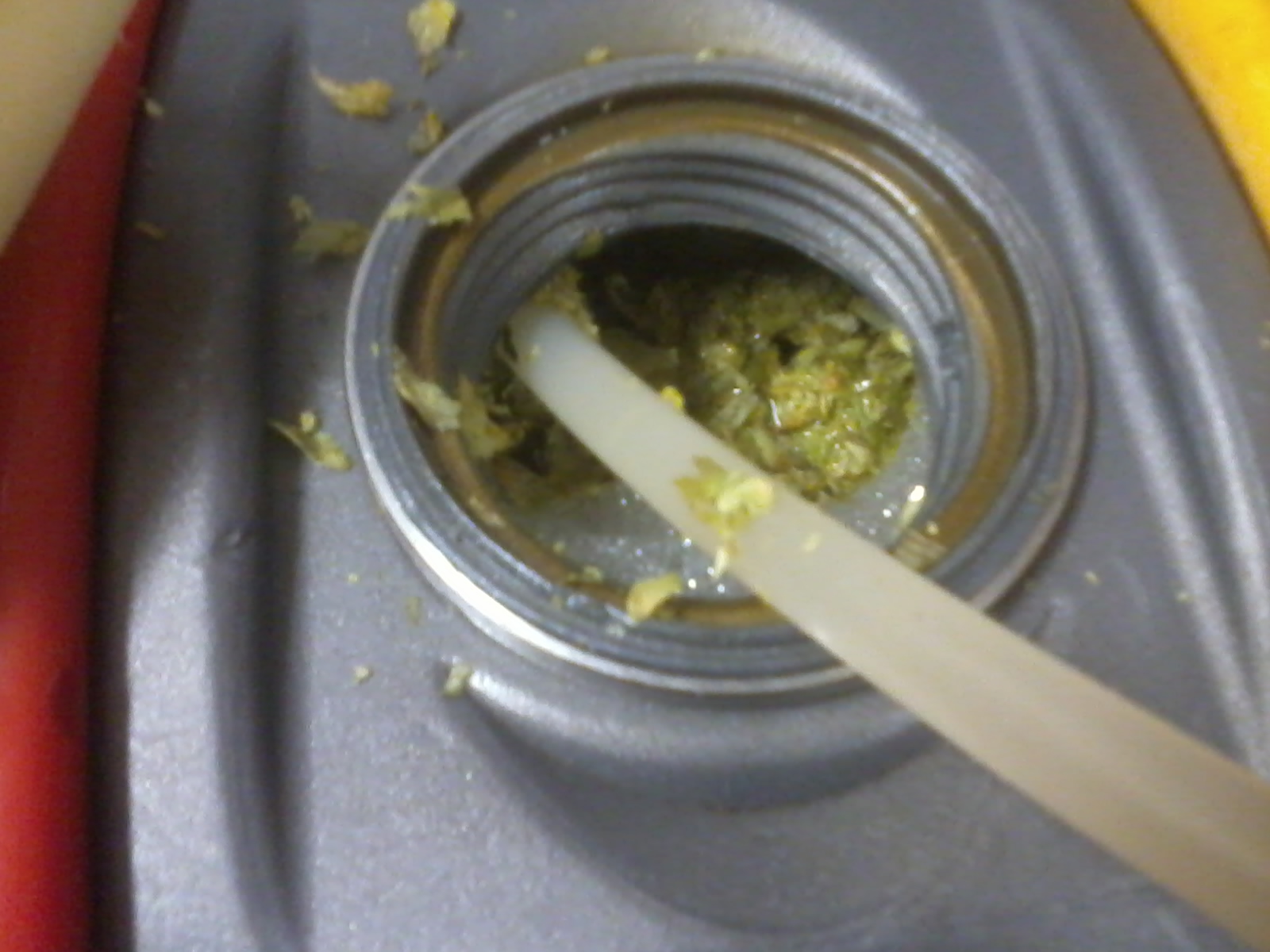
The wort is an excellent dark copper colour, which pleases me. This was acheived by using a little chocolate malt the last time, but I think I tasted it in the form of a little dryness, so to have this happen accidentally from the Munich etc is a pleasant, though not entirely unexpected surprise.
Why am I bothered by the colour? The beer is to be served at a wedding, alongside a locally brewed golden ale, and a locally brewed stout. It’s nice to brew a beer that’s a different colour, and nobody wants to drink a red ale all day: I speak from experience.

Result:
So, about all I can remember is that it was delicious, very popular, was lighter (colour) than I expected, and needed about another week for some of the hop roughness to smooth out. However, an excellent beer, of which many a pint was had. This was in contention with a locally brewed golden ale and a stout, and they all pretty much emptied at the same moment, so I’m pleased with the result.
Not so pleased, however, that I won’t be adding back some more crystal malt the next time!

Thursday, March 31, 2016

Sparklers

I'm wading in with sparklers. I've had some sort of beer blog for long enough now, I've earned it.

Pride of place in my rudimentary home bar is my Higene beer engine. Pride of place at the end of the swan-neck is a sparkler! I've read almost every other blog post and forum thread on these plastic things so far and I can't summon a third of the passion for anything that most drinkers have for one side of the argument or the other. As I see it, it's horses for courses.

Small, loose sparkler.
No sparkler: Brewer's choice, drinker's choice. Doesn't knock out much carbonation, fluffy head. If the beer is hoppy, it will still be hoppy. The southern pour.

Loose Sparkler (r): Quarters the beer. Much the same as not using a sparkler, really.

Angram Sparkler: These sparklers come in a variety of colours, with each having 16 holes of different sizes: green has holes of 1mm diameter, black 0.8mm, and white with holes at 0.6mm. There is a lot of resistance in the smaller holes. I just tried to blow through one of each.

Angram sparklers.

The green Sparkler is 'known' as the southern one, while the black one is known as the northern, for Yorkshire style beers. Interestingly, the only reference I have seen for a red sparkler, states that it is for Burton Style beers. Maybe it knocks out some of the sulphates.

I bought four Angram beer engines for an indecently small sum. One was marked 'Irish Stout', and had, firmly welded to the swanneck by old beer, a white sparkler. This, I presume*, pours with a thick, creamy head, as you'd expect on a pint of draught Guinness. Pub gas (a mix of nitrogen and carbon dioxide) was 'invented' to mimic hand-pulled beers, without the fuss of decent cellermanship.This mix delivers the likes of Guinness and creamflow beers with a low dose of carbon dioxide, making a smooth, creamy drink. Also known as nitrokeg.

The serving discussion should include the type of spout, of which there are two, swan neck and short. The swan neck is used with the sparkler, placed at the bottom of the glass, where there is a nib at the end of the sparkler to keep the holes about a centimetre off the bottom of the glass. This generates a lot of swirling cloud that settles up into the thick head and a crystal clear beer. Incidentally, the Guinness style cascading bubbles thing? Not unique to Guinness at all. The short spout allows the beer to fall into the glass, generating a nice, loose, bubbly head.

Not like this! Aaargh.

There is a lot more to the spout thing than I could hope to explain. It's about the drop in pressure as the beer exits the spout, and how this releases the carbon dioxide and so on. There's some chemistry involved with the oxidation process, too, I read, though I find that hard to believe simply because of the low temperatures and short times involved in this. People keep spouting stuff about how the beer aerates as it goes into the glass, and develops extra flavour. If anyone pours my pint like <--- that, they'll be pouring me a-bloody-nother.

In all, I have absolutely no preference, though I have noticed the beer is a little more bitter without the sparkler. I only own swannecks for now, and I hope to buy a short spout for one of the Angrams, just so I can see if there's a difference, but it's pretty low on my list of priorities.

For completeness, here are a variety of sparklers, including some fancy ones for soft drinks!


 *I'll be brewing a stout soon enough, and can't wait to try it through a sparkled beer engine. I read elsewhere that the sparkler vastly improves the maltier beer styles.

Monday, December 7, 2015

Carbon Footprint of your Home Brew

I've actually worked this out in one of my notebooks. It turned out to be a pretty hefty figure. I've only worked it out for the sugars consumed in the beer, for example, a five gallon batch of 1040 OG beer, fermented to 1011, will produce about 1kgof carbon dioxide. I agree, it sounds like a lot, but that's science for you.

http://www.guardian.co.uk/environment/green-living-blog/2010/jun/04/carbon-footprint-beer

Weep as you add in the airmiles of your beautiful American hops...

Cascade is grown in the UK, if you can get it, though it's mostly under contract. Still a lot of miles for your beer. Buying, growing, picking and using local is the only answer. To look about growing your own hops, here's a handy link!

www.gyohops.blogspot.ie

 If I can do it in northernmost Ireland...

Tuesday, January 6, 2015

Eyes on the prize... Yeast handling

What's that thing you say about wise men, or the more you know the more you whatever? Well, the same applies in brewing. I've spent the last four years honing my brew kit, my mash efficiency, bottling and kegging, recipes and above all else speed, or brewday efficiency. I'm getting the hang of it now, I think. However, one thing still stands in my way; taking good care of my yeast.

My process has been honed over the years, as I've improved my recipe design, mashing, boiling, hop additions and all the processes in between and after (bottling and kegging, serving temp, condition). The intermediate step, fermentation, is all down to the yeast. Mishandled yeast can, at best, behave a little odd, throw out some unusual flavours, or take a while to start or stop. Sometimes a poorly treated yeast will give you some bad flavours and aromas. I've got to the point now where that kind of thing is no longer tolerable, and it's apparently bad form to blame the yeast. Acetaldehyde (green apples), Diacetyl (butterscotch), solvents (pear drop esters at best, nail polish remover at worst) phenols (smokiness or pepperiness) and some rubbery aromas if allowed to die and disintegrate in the wort.

So, in the same way as I developed my other brewing skills, I'm now paying some close attention to my yeast. I do have a microscope, but haven't been able to use it properly yet, as I can't get hold of Haemocytometer plates. Nevertheless:

1: Pitching rates- at it's simplest, for a standard strength ale (up to SG. 1060) a single sachet of dried brewers yeast will work fine. For a lager, buy two. They're not expensive. Rehydration can take place before, or by addition to the cooled wort. Rehydration advice found here: http://www.fermentis.com/wp-content/uploads/2012/02/SFA_S04.pdf

For wet yeast (or liquid yeast) I believe one vial treated well will work for a standard strength ale, and again cough up for two if you're brewing a lager, but preparing a starter is the best treatment here.

Repitching yeast from a previous batch (slurry) can help reduce the cost of buying two or more sachets or a vial. Depending on how fussy the yeast, or how obvious it will be in the final beer, I'll either pitch straight onto the yeast cake in the fermenter, or scoop some out (in a sanitary manner) for use later.You wouldn't pitch a pale beer straight onto a stout yeast cake, for example.

2: Temperature- best not to pitch while too hot, or to have a temperature jump from yeast temperature to wort, or large fluctuations in temperature during fermentation (with the exception of a specific fermentation profile, like crash cooling, Diacetyl rests or increasing temperature for Belgian style beers or for attenuation). Also, keep the beer at a suitable temperature for the beer. Warmer temperatures tend to create more esters, while cooler fermentations, though slower, produce a cleaner beer.

Most beers ales are fine fermented between 16 and 20 degrees C, but do check. Also, picking yeast best suited to your actual ambient temperatures can work. WLP029 Kolsch yeast is a warm lager yeast, fermenting a clean beer at ale temperatures, and I've got Nottingham to work quite well at quite low temperatures.

3: Style- pick a yeast suited to the beer style brewed. I'm spending a few extra euros for wet yeasts, of which there is a much wider variety. Spending more money on Saaz and brewing water adjustments, pilsner malts and making space in the fridge is a waste without the perfect yeast for the job*. That's not to say that good beers can't be brewed with other yeasts, of course. Stout brewed with Belgian yeast, IPA with Brett,

My next step is to make a stir plate (read here for the reason I chose not to http://www.jimsbeerkit.co.uk/forum/viewtopic.php?f=12&t=70926), and aquire some Erlenmyer flasks in order to make some starters a few days in advance. I've bought a pressure cooker to sterilise wort in jars, and then I'll feel I've really got the hang of brewing.

*And for this prize of which I mention in the title, the yeast is Vermont IPA yeast (Conan). This is being fermented warm in my specially designed fermentation chamber (which has cost about a tenner to make from begged stolen and borrowed gizmos). The beer is an America IPA for the Galway brewer's competition. It didn't make it in, after all, but I enjoyed drinking it, I suppose.

Wednesday, February 5, 2014

One Step Closer

This morning I passed the BJCP online exam. It's a 200 questions in 1 hour exam, with questions usually about style comparisons, or what elements you'd expect in a beer style.

I answered all the questions, although I'm quite sure not all of them were right. The Multiple Choice Multiple Answer questions were tricky enough.

To celebrate I'm drinking a small glass of under-carbonated and under-attenuated Irish Red Ale, which clearly demonstrates that good at theory is not good at practice.

Nevertheless, I'm now a Provisional Judge, ready to take the tasting exam in Dublin this weekend.

What does one wear to a tasting exam, when it coincides with a Welsh-Irish 6Nations rugby match...

Wednesday, December 4, 2013

Brewing Britain - Andy Hamilton

Congratulations to author and forager Andy Hamilton, of Booze for Free fame, on the release of his latest book, Brewing Britain. 

http://www.amazon.co.uk/gp/product/0593072405/ref=as_li_ss_tl?ie=UTF8&camp=1634&creative=19450&creativeASIN=0593072405&linkCode=as2&tag=selfsufficien-21
Available in all good book stores, and Amazon.
Brewing Britain takes you on a trip through brewing history, buying and growing almost all of the ingredients, malting barley, and drying hops, and plenty more besides.

But most of this is preamble to the main point of the book: brewing beers of the styles commonly found in Britain. Milds and Bitters, IPAs, Stouts, Porters, Saisons (!?) and the odd lager. These come with style notes, common ingredients, commercial examples with tasting notes and a series of tried and tested recipes for making your own classic example.

To finish, Brewing Britain indexes a whole flight of beer festivals, all year round, for you to impart your hard won knowledge/try out your new skills.

Oh, and I've got a beer in it!!

The book would suit anyone with an interest in beer: from kit and all-grain brewer to Beer Sommelier and Real Ale Twat*. And it is coming up to Christmas…

*Viz. That is, Viz, not viz.


Friday, June 21, 2013

Dana (Super Styrian) hop

There's not much about this hop online, I presume because it's relatively new.

So, exclusively, my take.

Dana, a super Styrian, high alpha hop from Slovenia. 10.9% alpha acids.
Bred from Hallertau and Magnum in the Slovenia hop research centre.

Fantastic bitterness, very gentle but prominent all the same. As a late and dry hop it imparts a minty/herbal character. Not unpleasant, but not what you'd expect from the lemony aroma when the pack is opened. Similarly, the cat-like aroma that the oxidised hops exhibit doesn't carry over into the finished beer.

I made a Dana / Vienna SMaSH, with Brewferm lager yeast, and I was very impressed with the bitterness, and although the mintiness wasn't exactly what I was expecting, neither was it unpleasant. I'll be brewing an English style bitter with it soon enough, but with Goldings of some sort for the late hops.

To conclude: if you like minty/herbal, go for it. Very gentle bitterness.
Beers to try: Arbor Single Hop Dana, Acorn Dana IPA and Itchen Valley Dana

Monday, January 7, 2013

Hobgoblin Plus

Note: this beer won Silver Medal in the Milds, Bitters and Ales category in the National Homebrew Club competition on 2nd March 2013.

This morning I’ve put on the biggest mash ever! I have a very limited mash and sparge capacity, and the 24l coolbox is something I’m looking into getting, as it can keep 20-odd litres of mash hot for hours, if necessary. For now I’m still working with 10l mayonnaise tubs with holes drilled through. Not particularly efficient, it’s got to be said; so all my recipes are currently worked up to account for only 60% efficiency. Which mean mashing a lot of grain. I mashed 6 kg, which needed nearly 20l of water. You don’t need to be a mathematician to see it won’t all fit in at once.

Then, by misreading the recipe (it is morning, after all) I added more amber malt than I’d called for. If you’re familiar with the Hobgoblin clone recipe that’s going around (I’m sort of following Orfy’s), then you’ll see that any amber malt is too much. But it was going out of date, and I hadn’t got a chance to use it properly (the only recipe I tried it in was undrinkable because of the obscene amount of DMS present). It’s going to be an interesting beer. It’s also going to be about 6% and barrelled (in an old youngs white thing) for the rest of the winter months, and for a final experiment, I’m going to add gelatine finings to it, to see if I can get it clear a little quicker. It’ll also make it technically illegal for vegetarians to drink, which is such a pity…

Apart from all that it’s a standard all-grain, all-hassle brew.

I’ve found a friendly neighbourhood farmer who’s willing to take the grain off my hands. Though they specialise in organic, and because I don’t use organic ingredients they have to give it to the cat, or something, but it means I don’t have it hanging around unnecessarily. Hops, though. What to do with them?

The beer finally landed in at 6.1%, and after a week it had plenty of condition and was MUCH clearer that it would have been had I not fined it. I’ll definitely use gelatine again for the keg, as it was cheap and easy to use, at one sachet per 4.5 gallons. Also, the 300g or so of amber malt, which did taste very obnoxious after one week, did mellow out nicely in the second.

Next time I’ll use more hops for aroma (still not sure what I’m doing wrong there), and until I get a bigger mash tun, I’ll be reverting to half extract and half mash, as it’s a lot more manageable.

Finally though, to some positives:

1: Don’t be afraid to substitute a half pound of acid malt for a half pound of pale malt (or add an acid rest to your mash schedule), as it vastly improves efficiency if your mash ph as so far been a bit high (that’s alkaliny).

2: Gelatine finings are dead easy to use (better for a homebrewer than the fish finings, as it’s so easy to store and prepare).

3: If you have a cheapo Young’s white beer/cider barrel, put a short length of tube over/in the tap, as it makes dispensing a breeze. Today’s hangover was entirely due to enjoying pouring the beer so much that I repeated the experience ad nausem, so to speak.
 
Pictures to follow, once Blogger behaves itself.

Next up – Dave Line’s Tiger Beer 1038!

Tuesday, December 4, 2012

Post Brewlab Beer

It's been a month since I set off for windswept Sunderland to learn how to make my beer a little bit better. A whole month! Seems like only yesterday. Having said that, it's lucky they sent us home with the notes, as there was too much information for 20 drinkers to completely absorb.

If you have a wort chiller, the next bit doesn't apply!

The main issue for me is DMS (Dimethylsulphide), which is a taste/aroma compound which makes the beer taste and smell of cabbage, or overcooked sweetcorn. It can be present in small amounts and affect people's drinking pleasure differently. For me, though, not nice. So, after brewlab, have I got rid of it?

Well, in short, so far, yes! And thank God too, because it was ruining my beer. It was all about the cooling. The precursor to DMS compounds can be found in malted barley, and aggravated into existence during mashing, but then evaporated during a long rolling boil, to below noticeable amounts. Which is great. No problems then.

The DMS compounds continue to form, however, as the wort cools down, and longer cooling periods, as used by myself with no way of chilling the wort, can bring the levels of DMS back up to really  noticeable levels! So, although I don't have a cooling coil yet, it's on the list. I did, though, manage to maneuver the hot copper into a sink with cold water, which made short work of bringing the temperature down to about 60oc. Now we'll have to see after fermentation is complete if that was enough!

The recipe was for my usual Golden ale, which means that in spite of all the hops, there's no room to hide any unruly smells.

No pictures with this one, as I couldn't take a picture of the smell. Maybe in another couple of years.

Tuesday, November 6, 2012

Brewlab Education

And it's back to college for a few days!

I've been booked on the course since June, but I never thought it'd come around. But now I'm here, I can't believe I'm already halfway through! I've just finished the second day of the 3 day plus one Startup Brewery course at Brewlab Ltd, and it's basically sorted out all of my problems, from mash efficiency to those funny off-aromas, without even bothering to try one of my beers!

Firstly, the course took twenty of us (some home brewers, some not), through the brewing process from start to finish, and funny enough, they started with the brewing liquor, or water-what-you-make-beer-with, starting with the treatments in order to keep the beer in character and style with the original, and also in order to increase the mash efficiency, by adjusting the pH of the liquor. So that's the first thing I'll need, some litmus paper.

Then Arthur took us through the recipe compilation, using the ol scale, which measure's the malts potential extract, and will more than likely lead to much more accurate predictions of O.G., or the amount of fermentable sugar I can expect in my wort (pronounced wert, apparently, even in a thick Geordie accent). Out with Imperial, in with Metric. Sigh.

Arthur also casually pointed out that my DMS problem (smells like teen bedroom) comes from not chilling the wort quickly enough (or at all, in my case, as I usually let it cool down over a period of hours). Unpicking my brewing experience with one casual casual question: how do you cool down your wort?

The rest, all equally important, but numerous, will all be addressed soon. Some will be addressed at relatively little expense, some will likely cost more. Dr Thomas advocated getting a little more familiar, if not downright voyerstic, with yeast. Buy a microscope. I think Santa will be busy picking through 400x magnification Haemotologists microscopes in the Argos catalogue this month!

So, two more days to go, so much to learn, and so little time. You can see some gaps in your knowledge fill up, while watching others burst open, as you realise how much there is yet to learn! Early to bed tonight then... well, I'll just 'sample' this one more pint!

Tuesday, September 18, 2012

Harvest Ale #1

Fresh hopped Harvest Pale ale:

5oz, on the button.
It feels like ages ago that I got excited about the first hop shoots nuzzling at the surface of the soil. Now they’re drawing the attention of the council’s planning department! So, after nearly 5 months, I can finally reap the rewards of months of doing nothing; it’s basically looked after itself. Well, ok, I did rig up a zig-zag of Poundland plant wire, but that’s about it. The regular watering thing that plants seem to like wasn’t labour intensive this year, thank you Gulf Stream, and although I did manage to throw on some tomato feed once or twice, it was only because I was feeling guilty about having done, frankly, nothing. But now I’ve a brew day to plan. Some sort of pale ale should prove a hearty canvas for the piney Nugget hops I’ll be harvesting from the one bull-bine. Only one bine flowered, so I’ll probably only have quarter of a pound of wet hops at best, but lesson learned for next year: cut back all bull shoots, not just some. Success favours the brave.
They're all perfect.
The pale will be 2lbs maris otter, 1oz crystal & 1oz wheat, and ¼ oz Northdown (bitter) per 5 ounces of fresh hops. Thinking about it, it’s probably too much, as the equivalent is about 5oz aroma hops in a 5-gallon brew (fresh hops weigh between 4 and 6 times more wet than when dried). Though after consulting the forums where it seems that more is more, more might be enough. Besides, it will be easily spread over the last twenty minutes of the boil.

So on Harvest Ale eve, about three weeks later than the microbrewers who were at the Kent harvests, and nearly a week later than some Dublin homebrewers (I’m quite far north, have I said?), I finally set the alarm clock for an interesting brew day. I haven’t dreamt about homebrew yet, but if it’s going to happen, it’ll be tonight.

Harvest Day: 18-09-2012


Hot, hot, hop.

Woke up to a wet and windy day, and thanks to some sort of bizarre cold, absolutely no sense of smell - hardly conducive to a morning of brewing with fresh hops!
The first thing to do was to measure up the hops, so I knew how much of what to make. As it turned out, my estimate was spot on: 5 ounces of fresh hops. So I set half a gallon of water to heat up, and mashed in the malts. I left it, checking occasionally that it was at the upper end of the 60s (temperature, that is). Then, sparge, boil, and in with ¼ ounce of Northdown hops to bitter the pale ale. Once the wort had been boiling for 40 minutes I begun to add small handfuls of fresh hops and became frustrated at how little I could smell! Was it the lack of hop oils? Was it the small quantity of hops being added? Or was it, hopefully, the absence of my olfactory senses for the day?
The whole with went into a glass demijohn at 1045, which wasn’t far off estimate, and then in with some yeast from a couple of weeks ago. It’s not fermenting yet, but with any luck by this evening there should be a krauseny mess all over the living room floor.
There’s very little I can do now, for a couple of weeks, except the usual bottle palaver. However, in a couple of weeks there will be an honest appraisal of the beer, but in the meantime, there’s bound to be an update on the next beers up, namely:

#4, a hoppy golden ale, with a fantastic citrus aroma,
Chocolate and Passionfruit Porter, which may or may not be a stroke of genius,
WHT Tayleur’s dried Rowanberry brown ale, and finally,
CIDER! If I can get hold of some apples!

And maybe, by next September, I’ll have both more hops and a hopback to really force in the aroma, sense of smell or not!

Thursday, September 6, 2012

Wet hopping . . .

So, a malt order has been placed and the hops are so nearly ready to harvest. I've been following Paul Corbett from Charles Faram hop merchants on Twitter and they've had their first harvest down in south-east England somewhere, so I figure I can leave it a week or two yet, up here in a north-westerly part of Ireland, with emphasis on north.
The early stages of hop cone formation. We're a bit on from there.

The hops I'll be using will be Goldings for bitterness (bought), and the home-grown Nugget cones for my taste and aroma additions. The internet thinks I'll need to add 4 or five times more hops by weight than if I were using dry hops, so the batch size will largely depend on the crop, which while better than last year, is not a prizewinner!

So check back soon for a post about extra-hopping a kit beer (John Bull IPA), and then some time after that for the wet-hop experiment, which will go something like this:

7lbs pale, 1/2lb crystal, some goldings to the tune of 30-odd IBU, then nugget additions at 15, 10, 5 and 0 mins of the boil. I'll probably bottle the batch as I want to show it off (nobody ever visits the house for barrelled beer) so I won't be dryhopping. I'll ferment with whatever's spare in the fridge, really.

Hope that's the appetite whetted. And thanks be to the brew gods that 70% of the Irish grain harvest has been saved! Hurrah! - courtesy of Aertel at 2am.

Monday, March 19, 2012

Irish Stout

Happy St. Guin Patrick's Day!

It’s St. Patrick’s Day again. I wouldn’t normally spend three weeks preparing for a party, but it’d be a poor show if I hadn’t made enough beer to satisfy at least four Irishfolk. I’m not pandering to a stereotype here, by the way, just going by the last two years. The Tiger Beer will remain a secret, hidden from drunken, lecherous eyes; Kindleweisse is practically undrinkable, thanks to it tasting of cloves and nothing else. But a Golden Ale* will be available to reward paradees (people who do the parade).

But, because it’s St. Patrick’s Day, it’s only right I should brew a stout... even if only to thin out the feckin’ Guinness. I’ve only made two gallons for reasons better, but not entirely, known to myself. It’s a sweet stout, with crystal and chocolate malt in place of flaked and roasted barley (no it’s not a porter). From the bottling leftovers, it’s very, very nice. But it only has 6 days to condition. Will it be long enough? Not satisfied that secondary fermentation is going to be sufficient (bottling gravity was 1015, OG was only 1042!) I put them in the bed with the electric blanket on. It didn’t work. I’m still tiling the fireplace**; so with no proper heat for a couple of days, it may be very sweet, very flat stout! Never mind. I’ve no doubt it’ll go down well after a mile long parade.

Having homebrew on St. Paddy’s day is a flimsy tradition for me, seeing how I forgot last year, but it’s nice to have a house full of people and homebrew at the same time. They’re usually mutually exclusive. I’ve made pretty labels, bottled them in glass, and there’s at least some sort of beer to please everyone, and some Carlsberg to disappoint. So with any luck I’ll have a captive audience to test out my recipes. I'm placing listening devices down the back of the sofa so I can hear what people really think. Let's face it, noone's going to tell me bad things when I'm giving away free beer!

Now then, on with the rest of the preparations to people-proof the house. Nail everything down, hide the ornaments, light candles and bake bread. Oh yeah, and finish that fireplace!

* The post below mentions the Golden Ale, and I think it also says something like “at least make a passable pale ale”. Well, it’s a very good Pale Ale, but not a particularly good example of a Golden. Back to the drawing board with that recipe, I think. I’m not short of recipes for Pales.

** Last year’s promise was to get the stove in by St. Parick’s Day. This year’s promise is to tile around it.

Monday, February 27, 2012

What to do with a spare 8 hours.

A Sunday evening alone, the perfect opportunity for things I’m not allowed to do when Ms Homebrew’s in: listen to jazz, and brew beer. Ms Homebrew doesn’t mind me watching the rugby, even when it’s on at the same time as an Eastenders omnibus, but jazz? She’s no time for it. “It’s messy sounding”. And homebrewing’s just plain messy. I’m wearing slippers now, while I brew. Once upon a time my homebrew outfit included waders.

I’ve been a bit busy with non-homebrew related stuff, so I’ll condense the last two brews into a single paragraph, seeing as nothing particularly exciting happened. 5 gallons of tiger beer made, from Dave Line’s recipe, to which I was largely faithful; and Kindleweisse, a whatever’s-left-in-the-cupboard wheat beer. The first has been lagered in the shed (in the plastic bucket, at about 9 degrees, so not really lagering, I know), the second, Kindleweisse, an American Wheat beer, has been soaking up the heat from the stove, occasionally exciting the cat. It did take a little while to start fermenting, but once I’d put it where the cat usually sits, it sprung to life. Cats do know the warmest spots.

I’m making a batch of Golden Ale. I’m not really sure what makes Golden Ale. Everything else I’ve brewed has either been pretty dyed in the wool as a style, or written about enough for me to reproduce it with some confidence. Even Kindleweisse, which was only made because apparently in some countries you can ferment a wheat beer with a top fermenting (ale) yeast, and was the result of a read through Daniel’s book.

Even on the Internet there’s not much about ‘Golden Ale’. As far as I understand it’s a relatively new term, coined in 1994, which is enough time for the Internet to have an opinion on it. Nevertheless, I did find the following: It’s a golden sort of colour, between 3 and five percent alcohol, little in the way of a malt profile, but plenty from the hops, which should produce a crisp, dry beer, with a feeling of bitterness, and a powerful hop aroma.


To that end, I’ve used 7lbs 8oz pale malt, 4oz each of wheat malt and barley flakes, 1.5oz Fuggles (hops) and 1/3 oz of Styrian Goldings (also hops) to give an IBU of about 30 (which may or may not be typical of the style). I’ve mashed low and long to remove any trace of flavour from the beer, but I’ll put it back with late additions of whatever Styrian Goldings I have left, and plenty of Cascade. I’ve also used some Burton water salt treatment to help with the hoppiness. I was toying with the idea of using acid malt, to lift up the pH, which I gather the Pilsner producing countries do to create a crisp flavour, but I chickened out of that in favour of something that would, if all else failed, make a passable pale ale. I also tried this: put in your copper hops before the wort comes to the boil and the wort won’t kick and spill over the place – it works.

Ah, and now I’ve distracted myself with writing, and I can’t remember if the boil started at ten to ten, or ten past! D’oh.

Wednesday, January 25, 2012

New Year's Resolutions

This year I’m going to continue to observe my ‘No Carlsberg’ resolution from a few years back (it’s harder than it sounds), and to it I’ll add ‘Spend more time in the kitchen’. That means brewing!

So, did you get a homebrew kit for Christmas, and have found this blog after Googling some home brewed beer related words? Then isn’t Google clever, sending you here. The following is some advice to those new to the hobby, or as is often the case, those returning after years spent having a family.

Brewing your own beer from a tin, box or bag is really easy, and very rewarding.

Your basic kit is:
Your tin kit (plus 1kg / 2lbs of sugar)
A 5 gallon bucket, plus lid
Bottles
A 5ft-ish tube to siphon your beer
Sterilising stuff
Anything else is needlessly fancy: hydrometer, thermometer and so on. People have been brewing without these for thousands of years.

If you’ve been given just a tin your kit won’t be as instant as all that, but as most homebrew starter kits come with everything you need, you can get cracking right away. If you do need anything from the above list, you’ll not go far wrong with your local farmers co-op. Start there. And while you’re in the co-op, get yourself some wood, put up some shelves, as you’ll soon need more space than you know. This ‘hobby’ is addictive.

Now I have no intention of reproducing the instructions given with your can, as I’ve yet to brew from a tin that had insufficient instructions within. However, I’ve some additional info here, which may help understand the instructions.

Firstly, don’t let the instructions scare you. Whilst I too can’t stress enough the importance of cleanliness in brewing, it’s not something you need to stress about. The instructions are likely to give you nightmares about making 5 gallons of malt vinegar. This simply isn’t going to happen. If the bucket is dirty, wash it up. A clean bucket should then be sterilised with any old household sterilising stuff (Milton, VWP, a weak bleach solution), and rinsed until there’s no trace of your cleaner or steriliser. Now it’s ready to use. There’s no need for lab coveralls and industrial steam cleaners. It’s homebrew.

Now go back to the instructions. The next thing it’s probably going to harp on about is how quickly your wort is likely to become infected. Your wort is the watery malt extract stuff you’ve now got 5 gallons of, which hasn’t yet been fermented. If you leave the bucket unattended for a day or two then yes, you might have a sour tasting, very weakly alcoholic, undrinkable beer, but if you pitch (chuck in) your yeast into the wort as directed, you’ll have no problems. Put the lid on, put it somewhere not too warm, not too cold, and leave it for 12 hours. After twelve hours, or a day, or whenever you’ve got time, open the lid a little and take a peek. There should be a lovely, fluffy cloud-like layer going on, with lots of brown bitter-tasting bits sticking to it, and the smell can be anything between a loaf in the oven to rotten eggs. This is normal. Normal. Replace the lid having not sneezed into the bucket or dipped in anything unsavoury, relax, and continue to follow the instructions.

Finally, exercise patience. So it says leave your beer in bottles for 3 weeks? Leave it 6 and you’ll be amazed at what you’ve created. Don’t forget to tell everyone about it now; you’ll never make it through 5 gallons on your own.

Tuesday, December 20, 2011

'Tis the season...

Needing an extra empty pop bottle is a weak excuse for drinking homebrew before lunch. In the end I didn’t actually need the extra bottle, but the lengths I’d go to to secure one are as yet unplumbed.


The reason I needed another bottle is I’ve finally gotten around to bottling some cider. It’s been under fermentation lock for about as long as I can remember. Now it’s split between three 1 litre bottles, primed and awaiting spring. I’ve only a few more bottles of the Mmmild to give away, and then that’s the homebrewing done for another year (though there are still bags of empties and a keg needs washing!). If Santa gets me some ‘AAA’ batteries for Christmas I’ll be making some more booze in January (thermometer and beard-trimming-machine both take ‘triple A’s, so no mashing or shaving has been done for some time).

I’ll be looking forward to making some more lagers while the weather’s cold, which will be the perfect refreshing drink for our guaranteed hot Irish summer, and while I’m home over the festive season I hope to make a homebrew demo video. This will be a short, introductory video aimed at people who got their first homebrew kit for Christmas, and want to get cracking right away!

So, to end 2011, I’m happy to look back on a progressive year of brewing, from a tin in March, extract in May, and making the leap into almost completely all grain by July! The beers have been getting better and better, I’m making less and less mess, and I’m getting a whole batch of all-grain done in less that 12 hours! And that’s all true except for the less mess bit.

So, I hope you’ll check back for the video in January, but until then, Merry Christmas, and a happy new year. And remember: Homebrew isn’t just for Christmas, it’s a way of life.

Tuesday, December 6, 2011

Brew 20: Looking like a Mmmild winter, 5 gal of Dark Mild, 3.5 – 4%

I’m making more beer, because I don’t think the 5 gallons of Hobgoblin is quite enough. Another 5 of mild ought to see me through to New Year. The mild, as it happens, purely by coincidence, is just a low alcohol version of the hobgoblin recipe. Honestly, the recipe is all from my head. I had 4.5lbs of light DME left over in a bag, going solid, and I thought a mild would mature in time for Christmas, y’know, so I could give the odd bottle out, if I can bear to let go. It was only afterwards, looking over the recipe, that I realised it was close in proportions, just about 2/3s of the gravity. Just as well the Hobgoblin tastes great, then.
Uh, yes… I did open up a bottle after barely two weeks.

So, to conclude the post, here is my mild recipe, called ‘Mmmild’, even though there’s no way of knowing if it’ll taste that good for a number of weeks. I’m really just assuming that it’ll be great because it’s made of beer.
4.5lbs Light DME
12oz crystal 55L
2.3oz. chocolate malt
1oz maltodextrine/carapils
All the above, plus a pinch of salt, prepared in the usual extract/grain way.
Then, 0.3oz Magnum, 0.85oz Fuggles, and 0.4 Styrian Goldings all at 60 mins.
Followed by Irish moss and some more hops for flavour and aroma. Fermented with Safale US-04 (English Ale)

I’ll rack it into a secondary, so that if I do manage to part with some bottles as some sort of gift, there won’t be a ridiculous amount of yeast at the bottom. I know it’s harmless, you know it’s harmless, but it does look odd. Fortunately, if some yeast does end up in the glass, the chocolate malt will have darkened the beer sufficiently to cover any of that cloudiness up. There could even be a bit of chill haze, if that’s the way it turns out. So long as it tastes nice, eh? Seeing as the Hobgoblin clone I’m currently drinking tastes so fantastic, I imagine a ‘lite’ version will go down equally well.

By the way, it tastes like Rum and Dandelion and Burdock, and I love it! But what if nobody else does? Maybe I shouldn’t give any away after all.