with the occasional rant about tin openers...
Showing posts with label Ireland. Show all posts

Wednesday, August 9, 2017

Best Bitter, for cask.


Having brewed nothing at home for nearly a year, I’m making up for it now. The same can be said for this blog. Nothing new for years, and now I’ve a backlog of posts. Not because I’ve got more to say, necessarily, but I’ve finally got the hang of separating the content. So, to tease, the next couple of posts will include:

  • Toys for a Tenner: All the best toys for really keen homebrewers
  • Great Gruit: Brewing with Kviek and some not-hops
  • In good nick: Real ale, and how to get beer on the floor and in your face
  • Get pally at your local: Building an awesome bar from pallets

Onto the bitter. The recipe is similar to the last, because it was really very good. The changes include swapping out some crystal malt for Munich and Aromatic, simply because I wanted to try the Munich, and I was sent more Aromatic than I needed, and less crystal because I wasn’t. In they go.

This is a single hopped beer (not like that Double Hopped madness from Diageo, Hophouse 13), in that it is bittered, flavoured and aromad by Pilgrim. I’m nowhere near the end of the British hop list yet, so I’ve no interest in American or NZ hops when there are still so many varieties to try nearer to home. Pilgrim was described as "deeply fruity, lemon/grapefruit aroma with flavour characteristics including verdant, berries and pears. As a bittering hop it provides a refreshing, full-bodied and rounded bitterness" by The Homebrew Company, and they recommend its trial, so having enjoyed it in the first batch, I’ve stretched to another packet of pellets for bittering. I need to use some leaf hops to help filter out the trub etc, so the last additions will be leaf, totalling about 70 grams (This is a double batch, aiming for 44 litres in the fermenter). 70g won’t sound like much to many of you, I’m sure, but this is a session beer, remember. Drinky drinky, not sippy sippy.

The yeast is a reconditioned Fuller’s bottle, and it’s being stirred right up until pitching. This is its second run for me, and seems in good condition, so I’m happy to pitch later this evening. It’ll be a two litre starter, but I’ve no idea what that means in terms of yeast cell growth, as the starting quantity was one metric dollop, and it’s viability unknown.
I think the Fuller’s strain is WLP002, English Ale or something, should you want to pay €8 for it.
The recipe:
Minch pale (4-6srm) 5.8 kg
Munich malt (  ) 500g
Crystal 40 (80), 300g
Aromatic malt 200g
Torrefied wheat 500g
Water: down to 35ppm alkalinity, and added 10g CaSO4, 4g CaCl. 22.5l, should give roughly 3:1 litres:kg. God only knows what the Sulphate : Chloride ratio will end up, but going from experience it should be roughly 2:1, with about 200 – 300 ppm sulphate, and half of that in Chloride. That will leave plenty of Calcium for the yeast. Treated enough water to liquor back at the end.


Temperature settled at 65oC, so should get the FG down to 1010.
The grist yielded 44 litres of 1046, with plenty more sugars left to extract (sparge stopped at 1020).
Boil:
Pilgrim (pellet) 10.3%aa, 42g
Pilgrim (leaf) 10.4%aa, 35g (+ ¼ tablet protafloc)
Pilgrim (leaf) 10.4%aa, 25g

1 small handful added to cask. Book says so.
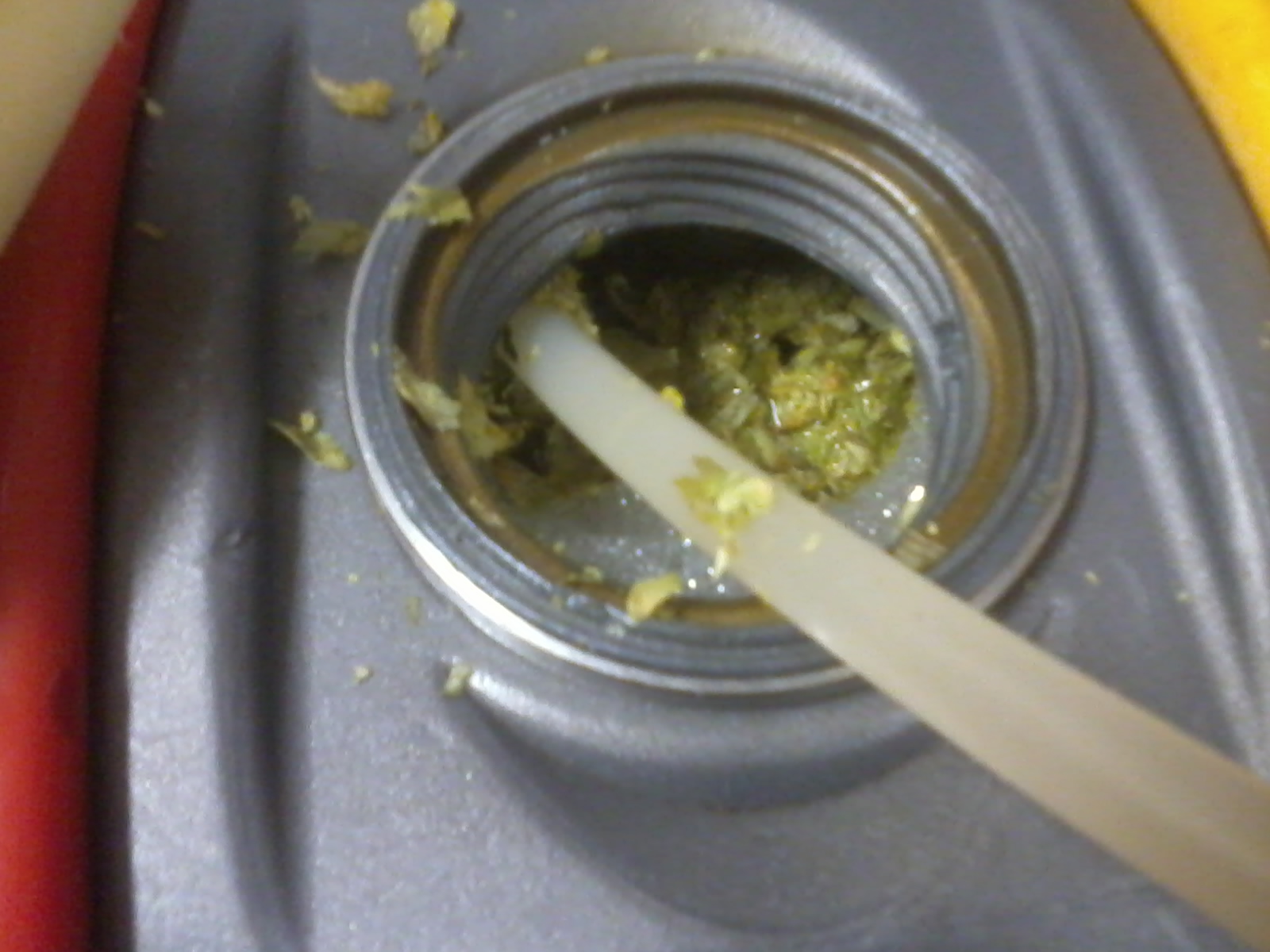
The wort is an excellent dark copper colour, which pleases me. This was acheived by using a little chocolate malt the last time, but I think I tasted it in the form of a little dryness, so to have this happen accidentally from the Munich etc is a pleasant, though not entirely unexpected surprise.
Why am I bothered by the colour? The beer is to be served at a wedding, alongside a locally brewed golden ale, and a locally brewed stout. It’s nice to brew a beer that’s a different colour, and nobody wants to drink a red ale all day: I speak from experience.

Result:
So, about all I can remember is that it was delicious, very popular, was lighter (colour) than I expected, and needed about another week for some of the hop roughness to smooth out. However, an excellent beer, of which many a pint was had. This was in contention with a locally brewed golden ale and a stout, and they all pretty much emptied at the same moment, so I’m pleased with the result.
Not so pleased, however, that I won’t be adding back some more crystal malt the next time!

Thursday, March 30, 2017

Homebrewed is Best

It’s nearly April, not that that means anything by itself, but I’ve wanted to brew a bitter for a while now. I reread Pete Brown’s ‘ManWalks Into a Pub’, an excellent book on the evolution of the British public house, and frankly that made me very thirsty. I’ve also been reading TheDoghouse, a pub-based periodical from Ludlow, who also run a micropub from the same office. Fancied a pint.
But no, I’ve wanted to brew a bitter since before then, too. I meant to brew one for the Belfast CAMRA ale festival in November, but missed the deadline by some months. On paper I’d been messing around with a recipe (mainly hop and yeast selection, and a standard malt bill), and so as far back as probably July I’ve been thinking about Bitter.

Bitter is my favourite beer style of all, and it just doesn’t seem to exist in great quantities in Ireland, apart from my occasional trip to Wetherspoons in Derry, where it is served on handpull. It’s time to brew one for the house, for my own set of beer pumps.
 
The recipe is fairly standard, except that I’ve used a lot more wheat than usual, as I want to really nail the head retention this time. I’m also watching the calcium content for the same reason. The brewing guidelines I’m using today come from Nigel Sadler’s book ‘Notes on Craft AleBrewing’. It’s and excellent reference book, full of calculations and science, and has helped fill in a few gaps that other books have missed. The ‘rules’ that I’m specifically adhereing to are the water guidelines, hop rates and method, yeast pitching rates and so on. If you’ve read the Brewing Elements series, then I can recommend this book too, though it’s more use as a postscript than an introduction.

The yeast comes from the dregs of a bottle of Fuller’s IPA. Yeast culturing is something I haven’t had a proper go at yet, normally opting for sachets of dry yeast (I see nothing wrong with dry yeast, except for the lack of variety, which Mangrove Jacks have gone some way towards rectifying) or the slightly more expensive liquid options. WhiteLabs are fantastic; their standard range, plus the Platinum seasonals, strange new yeasts and bacteria thanks to Yeast Bay, and now even rarer yeasts WhiteLabs ‘the Vault’, it’s a great time to be a homebrewer. However, in the microbrewery, it’s nearly ten times as expensive (or thereabouts, nobody will actually give me a proper price) to buy liquid as dry, for the quantity I need, so I wanted to do a few trials of the stirplate first. I couldn’t be happier with my first effort! The idea is to buy an €8 vial of WhiteLabs and culture it up to the 750g yeast that I need for a brew. This will open up a world of yeast for use in the brewery, without the increased cost.
Just like cats, homebrewers know the warmest places in the house.
Instructions for making a stirplate and starter are readily available online, and I made mine for nothing, using stuff I had lying about the house. One of the options to consider is one magnet or two. That decision was made for me by misplacing one of the pair. The magnet sits in the centre of the computer fan, and works fine. I expect both ways have their merits. Practice using your stirplate with a glass of water first, to see what stirbar size and speed etc will do. I bought a packet of stirbars in various sizes from eBay, which gives me plenty of options, from the tictac sized stirbar for small starters, through liquorice torpedo sized, onto half-a-fudge, which should works in a demijohn.

Just FYI, then, I added 200ml of 1.020 unhopped wort to the dregs of a bottle of Fuller’s IPA, stirred that, increased that to 500ml at 1.030, then one more step to 2 litres of 1.040.


The recipe itself is standard enough:
Pale, 3240g (81%)
Crystal 80, 320g (8%)
Wheat malt, 400g (10%)
Chocolate Malt, 40g (1%) for colour adjustment – I’ve been drinking golden beers for ages


Mashed at 67oc, with water adjusted to
<40ppm alkalinity,
150ppm Chloride,
300ppm Sulphate, and
100 - 200ppm Calcium.
Spargewater the same.

Copper volume, 24litres at 1038, should give me a 20 litre ferment at 1040.
Northdown 6% to bitter, to 30IBU (29g pellets)
Pilgrim 10% at 15 minutes, 15 grams, and ten more at flameout. Some protafloc at 15, too.

Yeast, Fuller’s IPA (I hope it’s not a lager strain used for bottle conditioning, now I’ve gone to all that effort!). Pitched the fresh slurry at 22oc, god knows how much or how little, but


Tasting notes to come.

Monday, December 7, 2015

Carbon Footprint of your Home Brew

I've actually worked this out in one of my notebooks. It turned out to be a pretty hefty figure. I've only worked it out for the sugars consumed in the beer, for example, a five gallon batch of 1040 OG beer, fermented to 1011, will produce about 1kgof carbon dioxide. I agree, it sounds like a lot, but that's science for you.

http://www.guardian.co.uk/environment/green-living-blog/2010/jun/04/carbon-footprint-beer

Weep as you add in the airmiles of your beautiful American hops...

Cascade is grown in the UK, if you can get it, though it's mostly under contract. Still a lot of miles for your beer. Buying, growing, picking and using local is the only answer. To look about growing your own hops, here's a handy link!

www.gyohops.blogspot.ie

 If I can do it in northernmost Ireland...

Sunday, March 2, 2014

Judging at the National Homebrew Club competition

It's a tough job but someone's got to do it!

1st March, St. David's Day, and I've to catch the 0430 bus to Dublin. It's a long trip down, but it's the last in the series of my journey to becoming a judge. It's been emotional.

The last beer before lunch.
The day started with registration; getting your name badge and picking what you want for lunch. I was asked to judge category 10A, American Pale Ales, so sat down at a table next to Sarah, owner of the new N17 brewery in Tuam. It was a pleasure to judge alongside Sarah, who certainly knows her stuff. We were within 2 or 3 marks on all beers, so allocating a score was fairly straightforward.

miniBOS
Once we'd judged our flights, a total of 9 beers, I think Sarah went and found the Stout table and I settled amongst the American IPAs - as if I hadn't already had all the hops I could take!

The judging was quite easy in terms of picking which beers suited the style more than others, but filling in all the spaces was a little tricky on some scoresheets. I hope the information I put in is useful to the brewers.

After that I sat down to clear my palate and head for the mini Best Of Show round, which took place once all the category 10 beers had been judged. That left me and Ronan about 18 beers to sort through and pick the best.

Sorting through 18 beers to quickly asses which deserves to go through to the Best Of Show in Cork was like drinking 18 shots of beer. The aul head was spinning by the end of it.

As bus o'clock drew rapidly nearer, the silver medal in category 1 was announced, and it was me! A quick gulp of champagne, a handshake or two and I ran off out the room, up the street with a big grin on my face!

I had a fantastic time. The taxi driver who took me to the bus at 4am asked me if I was getting paid for judging, or even getting travel allowances. To be honest, with all those lovely beers, people and the craic, I'd nearly consider paying for the privilege of judging again. Thanks to Renier, our steward, as well as all the other stewards who helped us in the miniBOS.

What a day.

Interested in being a part of Ireland's biggest homebrew community?
www.nationalhomebrewclub.com

Monday, January 7, 2013

Hobgoblin Plus

Note: this beer won Silver Medal in the Milds, Bitters and Ales category in the National Homebrew Club competition on 2nd March 2013.

This morning I’ve put on the biggest mash ever! I have a very limited mash and sparge capacity, and the 24l coolbox is something I’m looking into getting, as it can keep 20-odd litres of mash hot for hours, if necessary. For now I’m still working with 10l mayonnaise tubs with holes drilled through. Not particularly efficient, it’s got to be said; so all my recipes are currently worked up to account for only 60% efficiency. Which mean mashing a lot of grain. I mashed 6 kg, which needed nearly 20l of water. You don’t need to be a mathematician to see it won’t all fit in at once.

Then, by misreading the recipe (it is morning, after all) I added more amber malt than I’d called for. If you’re familiar with the Hobgoblin clone recipe that’s going around (I’m sort of following Orfy’s), then you’ll see that any amber malt is too much. But it was going out of date, and I hadn’t got a chance to use it properly (the only recipe I tried it in was undrinkable because of the obscene amount of DMS present). It’s going to be an interesting beer. It’s also going to be about 6% and barrelled (in an old youngs white thing) for the rest of the winter months, and for a final experiment, I’m going to add gelatine finings to it, to see if I can get it clear a little quicker. It’ll also make it technically illegal for vegetarians to drink, which is such a pity…

Apart from all that it’s a standard all-grain, all-hassle brew.

I’ve found a friendly neighbourhood farmer who’s willing to take the grain off my hands. Though they specialise in organic, and because I don’t use organic ingredients they have to give it to the cat, or something, but it means I don’t have it hanging around unnecessarily. Hops, though. What to do with them?

The beer finally landed in at 6.1%, and after a week it had plenty of condition and was MUCH clearer that it would have been had I not fined it. I’ll definitely use gelatine again for the keg, as it was cheap and easy to use, at one sachet per 4.5 gallons. Also, the 300g or so of amber malt, which did taste very obnoxious after one week, did mellow out nicely in the second.

Next time I’ll use more hops for aroma (still not sure what I’m doing wrong there), and until I get a bigger mash tun, I’ll be reverting to half extract and half mash, as it’s a lot more manageable.

Finally though, to some positives:

1: Don’t be afraid to substitute a half pound of acid malt for a half pound of pale malt (or add an acid rest to your mash schedule), as it vastly improves efficiency if your mash ph as so far been a bit high (that’s alkaliny).

2: Gelatine finings are dead easy to use (better for a homebrewer than the fish finings, as it’s so easy to store and prepare).

3: If you have a cheapo Young’s white beer/cider barrel, put a short length of tube over/in the tap, as it makes dispensing a breeze. Today’s hangover was entirely due to enjoying pouring the beer so much that I repeated the experience ad nausem, so to speak.
 
Pictures to follow, once Blogger behaves itself.

Next up – Dave Line’s Tiger Beer 1038!

Tuesday, December 4, 2012

Post Brewlab Beer

It's been a month since I set off for windswept Sunderland to learn how to make my beer a little bit better. A whole month! Seems like only yesterday. Having said that, it's lucky they sent us home with the notes, as there was too much information for 20 drinkers to completely absorb.

If you have a wort chiller, the next bit doesn't apply!

The main issue for me is DMS (Dimethylsulphide), which is a taste/aroma compound which makes the beer taste and smell of cabbage, or overcooked sweetcorn. It can be present in small amounts and affect people's drinking pleasure differently. For me, though, not nice. So, after brewlab, have I got rid of it?

Well, in short, so far, yes! And thank God too, because it was ruining my beer. It was all about the cooling. The precursor to DMS compounds can be found in malted barley, and aggravated into existence during mashing, but then evaporated during a long rolling boil, to below noticeable amounts. Which is great. No problems then.

The DMS compounds continue to form, however, as the wort cools down, and longer cooling periods, as used by myself with no way of chilling the wort, can bring the levels of DMS back up to really  noticeable levels! So, although I don't have a cooling coil yet, it's on the list. I did, though, manage to maneuver the hot copper into a sink with cold water, which made short work of bringing the temperature down to about 60oc. Now we'll have to see after fermentation is complete if that was enough!

The recipe was for my usual Golden ale, which means that in spite of all the hops, there's no room to hide any unruly smells.

No pictures with this one, as I couldn't take a picture of the smell. Maybe in another couple of years.

Tuesday, September 18, 2012

Harvest Ale #1

Fresh hopped Harvest Pale ale:

5oz, on the button.
It feels like ages ago that I got excited about the first hop shoots nuzzling at the surface of the soil. Now they’re drawing the attention of the council’s planning department! So, after nearly 5 months, I can finally reap the rewards of months of doing nothing; it’s basically looked after itself. Well, ok, I did rig up a zig-zag of Poundland plant wire, but that’s about it. The regular watering thing that plants seem to like wasn’t labour intensive this year, thank you Gulf Stream, and although I did manage to throw on some tomato feed once or twice, it was only because I was feeling guilty about having done, frankly, nothing. But now I’ve a brew day to plan. Some sort of pale ale should prove a hearty canvas for the piney Nugget hops I’ll be harvesting from the one bull-bine. Only one bine flowered, so I’ll probably only have quarter of a pound of wet hops at best, but lesson learned for next year: cut back all bull shoots, not just some. Success favours the brave.
They're all perfect.
The pale will be 2lbs maris otter, 1oz crystal & 1oz wheat, and ¼ oz Northdown (bitter) per 5 ounces of fresh hops. Thinking about it, it’s probably too much, as the equivalent is about 5oz aroma hops in a 5-gallon brew (fresh hops weigh between 4 and 6 times more wet than when dried). Though after consulting the forums where it seems that more is more, more might be enough. Besides, it will be easily spread over the last twenty minutes of the boil.

So on Harvest Ale eve, about three weeks later than the microbrewers who were at the Kent harvests, and nearly a week later than some Dublin homebrewers (I’m quite far north, have I said?), I finally set the alarm clock for an interesting brew day. I haven’t dreamt about homebrew yet, but if it’s going to happen, it’ll be tonight.

Harvest Day: 18-09-2012


Hot, hot, hop.

Woke up to a wet and windy day, and thanks to some sort of bizarre cold, absolutely no sense of smell - hardly conducive to a morning of brewing with fresh hops!
The first thing to do was to measure up the hops, so I knew how much of what to make. As it turned out, my estimate was spot on: 5 ounces of fresh hops. So I set half a gallon of water to heat up, and mashed in the malts. I left it, checking occasionally that it was at the upper end of the 60s (temperature, that is). Then, sparge, boil, and in with ¼ ounce of Northdown hops to bitter the pale ale. Once the wort had been boiling for 40 minutes I begun to add small handfuls of fresh hops and became frustrated at how little I could smell! Was it the lack of hop oils? Was it the small quantity of hops being added? Or was it, hopefully, the absence of my olfactory senses for the day?
The whole with went into a glass demijohn at 1045, which wasn’t far off estimate, and then in with some yeast from a couple of weeks ago. It’s not fermenting yet, but with any luck by this evening there should be a krauseny mess all over the living room floor.
There’s very little I can do now, for a couple of weeks, except the usual bottle palaver. However, in a couple of weeks there will be an honest appraisal of the beer, but in the meantime, there’s bound to be an update on the next beers up, namely:

#4, a hoppy golden ale, with a fantastic citrus aroma,
Chocolate and Passionfruit Porter, which may or may not be a stroke of genius,
WHT Tayleur’s dried Rowanberry brown ale, and finally,
CIDER! If I can get hold of some apples!

And maybe, by next September, I’ll have both more hops and a hopback to really force in the aroma, sense of smell or not!

Monday, September 10, 2012

Grow Your Own Hops

So much better than grapes, and loads easier to grow!
I did try to grow and malt my own barley, last year. This year I'm letting that go to the professionals. However, I am sucessfully growing my own hops. And to help anyone else trying to do the same, or wishing to, read this:

 
Within this new, small site you'll find much of the information needed to buy, grow, harvest dry and brew. It's a great aside to the homebrew hobby (sorry, not hobby, um... art), and when I harvest later this week I'm sure it'll prove to be a worthwhile one too.

 
I hope the information proves useful or inspiring: and if I can grow hops way up where I'm living, then anybody can anywhere.


Thursday, September 6, 2012

Wet hopping . . .

So, a malt order has been placed and the hops are so nearly ready to harvest. I've been following Paul Corbett from Charles Faram hop merchants on Twitter and they've had their first harvest down in south-east England somewhere, so I figure I can leave it a week or two yet, up here in a north-westerly part of Ireland, with emphasis on north.
The early stages of hop cone formation. We're a bit on from there.

The hops I'll be using will be Goldings for bitterness (bought), and the home-grown Nugget cones for my taste and aroma additions. The internet thinks I'll need to add 4 or five times more hops by weight than if I were using dry hops, so the batch size will largely depend on the crop, which while better than last year, is not a prizewinner!

So check back soon for a post about extra-hopping a kit beer (John Bull IPA), and then some time after that for the wet-hop experiment, which will go something like this:

7lbs pale, 1/2lb crystal, some goldings to the tune of 30-odd IBU, then nugget additions at 15, 10, 5 and 0 mins of the boil. I'll probably bottle the batch as I want to show it off (nobody ever visits the house for barrelled beer) so I won't be dryhopping. I'll ferment with whatever's spare in the fridge, really.

Hope that's the appetite whetted. And thanks be to the brew gods that 70% of the Irish grain harvest has been saved! Hurrah! - courtesy of Aertel at 2am.

Monday, March 19, 2012

Irish Stout

Happy St. Guin Patrick's Day!

It’s St. Patrick’s Day again. I wouldn’t normally spend three weeks preparing for a party, but it’d be a poor show if I hadn’t made enough beer to satisfy at least four Irishfolk. I’m not pandering to a stereotype here, by the way, just going by the last two years. The Tiger Beer will remain a secret, hidden from drunken, lecherous eyes; Kindleweisse is practically undrinkable, thanks to it tasting of cloves and nothing else. But a Golden Ale* will be available to reward paradees (people who do the parade).

But, because it’s St. Patrick’s Day, it’s only right I should brew a stout... even if only to thin out the feckin’ Guinness. I’ve only made two gallons for reasons better, but not entirely, known to myself. It’s a sweet stout, with crystal and chocolate malt in place of flaked and roasted barley (no it’s not a porter). From the bottling leftovers, it’s very, very nice. But it only has 6 days to condition. Will it be long enough? Not satisfied that secondary fermentation is going to be sufficient (bottling gravity was 1015, OG was only 1042!) I put them in the bed with the electric blanket on. It didn’t work. I’m still tiling the fireplace**; so with no proper heat for a couple of days, it may be very sweet, very flat stout! Never mind. I’ve no doubt it’ll go down well after a mile long parade.

Having homebrew on St. Paddy’s day is a flimsy tradition for me, seeing how I forgot last year, but it’s nice to have a house full of people and homebrew at the same time. They’re usually mutually exclusive. I’ve made pretty labels, bottled them in glass, and there’s at least some sort of beer to please everyone, and some Carlsberg to disappoint. So with any luck I’ll have a captive audience to test out my recipes. I'm placing listening devices down the back of the sofa so I can hear what people really think. Let's face it, noone's going to tell me bad things when I'm giving away free beer!

Now then, on with the rest of the preparations to people-proof the house. Nail everything down, hide the ornaments, light candles and bake bread. Oh yeah, and finish that fireplace!

* The post below mentions the Golden Ale, and I think it also says something like “at least make a passable pale ale”. Well, it’s a very good Pale Ale, but not a particularly good example of a Golden. Back to the drawing board with that recipe, I think. I’m not short of recipes for Pales.

** Last year’s promise was to get the stove in by St. Parick’s Day. This year’s promise is to tile around it.

Monday, February 27, 2012

What to do with a spare 8 hours.

A Sunday evening alone, the perfect opportunity for things I’m not allowed to do when Ms Homebrew’s in: listen to jazz, and brew beer. Ms Homebrew doesn’t mind me watching the rugby, even when it’s on at the same time as an Eastenders omnibus, but jazz? She’s no time for it. “It’s messy sounding”. And homebrewing’s just plain messy. I’m wearing slippers now, while I brew. Once upon a time my homebrew outfit included waders.

I’ve been a bit busy with non-homebrew related stuff, so I’ll condense the last two brews into a single paragraph, seeing as nothing particularly exciting happened. 5 gallons of tiger beer made, from Dave Line’s recipe, to which I was largely faithful; and Kindleweisse, a whatever’s-left-in-the-cupboard wheat beer. The first has been lagered in the shed (in the plastic bucket, at about 9 degrees, so not really lagering, I know), the second, Kindleweisse, an American Wheat beer, has been soaking up the heat from the stove, occasionally exciting the cat. It did take a little while to start fermenting, but once I’d put it where the cat usually sits, it sprung to life. Cats do know the warmest spots.

I’m making a batch of Golden Ale. I’m not really sure what makes Golden Ale. Everything else I’ve brewed has either been pretty dyed in the wool as a style, or written about enough for me to reproduce it with some confidence. Even Kindleweisse, which was only made because apparently in some countries you can ferment a wheat beer with a top fermenting (ale) yeast, and was the result of a read through Daniel’s book.

Even on the Internet there’s not much about ‘Golden Ale’. As far as I understand it’s a relatively new term, coined in 1994, which is enough time for the Internet to have an opinion on it. Nevertheless, I did find the following: It’s a golden sort of colour, between 3 and five percent alcohol, little in the way of a malt profile, but plenty from the hops, which should produce a crisp, dry beer, with a feeling of bitterness, and a powerful hop aroma.


To that end, I’ve used 7lbs 8oz pale malt, 4oz each of wheat malt and barley flakes, 1.5oz Fuggles (hops) and 1/3 oz of Styrian Goldings (also hops) to give an IBU of about 30 (which may or may not be typical of the style). I’ve mashed low and long to remove any trace of flavour from the beer, but I’ll put it back with late additions of whatever Styrian Goldings I have left, and plenty of Cascade. I’ve also used some Burton water salt treatment to help with the hoppiness. I was toying with the idea of using acid malt, to lift up the pH, which I gather the Pilsner producing countries do to create a crisp flavour, but I chickened out of that in favour of something that would, if all else failed, make a passable pale ale. I also tried this: put in your copper hops before the wort comes to the boil and the wort won’t kick and spill over the place – it works.

Ah, and now I’ve distracted myself with writing, and I can’t remember if the boil started at ten to ten, or ten past! D’oh.

Tuesday, December 20, 2011

'Tis the season...

Needing an extra empty pop bottle is a weak excuse for drinking homebrew before lunch. In the end I didn’t actually need the extra bottle, but the lengths I’d go to to secure one are as yet unplumbed.


The reason I needed another bottle is I’ve finally gotten around to bottling some cider. It’s been under fermentation lock for about as long as I can remember. Now it’s split between three 1 litre bottles, primed and awaiting spring. I’ve only a few more bottles of the Mmmild to give away, and then that’s the homebrewing done for another year (though there are still bags of empties and a keg needs washing!). If Santa gets me some ‘AAA’ batteries for Christmas I’ll be making some more booze in January (thermometer and beard-trimming-machine both take ‘triple A’s, so no mashing or shaving has been done for some time).

I’ll be looking forward to making some more lagers while the weather’s cold, which will be the perfect refreshing drink for our guaranteed hot Irish summer, and while I’m home over the festive season I hope to make a homebrew demo video. This will be a short, introductory video aimed at people who got their first homebrew kit for Christmas, and want to get cracking right away!

So, to end 2011, I’m happy to look back on a progressive year of brewing, from a tin in March, extract in May, and making the leap into almost completely all grain by July! The beers have been getting better and better, I’m making less and less mess, and I’m getting a whole batch of all-grain done in less that 12 hours! And that’s all true except for the less mess bit.

So, I hope you’ll check back for the video in January, but until then, Merry Christmas, and a happy new year. And remember: Homebrew isn’t just for Christmas, it’s a way of life.

Tuesday, December 6, 2011

Brew 20: Looking like a Mmmild winter, 5 gal of Dark Mild, 3.5 – 4%

I’m making more beer, because I don’t think the 5 gallons of Hobgoblin is quite enough. Another 5 of mild ought to see me through to New Year. The mild, as it happens, purely by coincidence, is just a low alcohol version of the hobgoblin recipe. Honestly, the recipe is all from my head. I had 4.5lbs of light DME left over in a bag, going solid, and I thought a mild would mature in time for Christmas, y’know, so I could give the odd bottle out, if I can bear to let go. It was only afterwards, looking over the recipe, that I realised it was close in proportions, just about 2/3s of the gravity. Just as well the Hobgoblin tastes great, then.
Uh, yes… I did open up a bottle after barely two weeks.

So, to conclude the post, here is my mild recipe, called ‘Mmmild’, even though there’s no way of knowing if it’ll taste that good for a number of weeks. I’m really just assuming that it’ll be great because it’s made of beer.
4.5lbs Light DME
12oz crystal 55L
2.3oz. chocolate malt
1oz maltodextrine/carapils
All the above, plus a pinch of salt, prepared in the usual extract/grain way.
Then, 0.3oz Magnum, 0.85oz Fuggles, and 0.4 Styrian Goldings all at 60 mins.
Followed by Irish moss and some more hops for flavour and aroma. Fermented with Safale US-04 (English Ale)

I’ll rack it into a secondary, so that if I do manage to part with some bottles as some sort of gift, there won’t be a ridiculous amount of yeast at the bottom. I know it’s harmless, you know it’s harmless, but it does look odd. Fortunately, if some yeast does end up in the glass, the chocolate malt will have darkened the beer sufficiently to cover any of that cloudiness up. There could even be a bit of chill haze, if that’s the way it turns out. So long as it tastes nice, eh? Seeing as the Hobgoblin clone I’m currently drinking tastes so fantastic, I imagine a ‘lite’ version will go down equally well.

By the way, it tastes like Rum and Dandelion and Burdock, and I love it! But what if nobody else does? Maybe I shouldn’t give any away after all.

Wednesday, November 9, 2011

Brew #19: Brew Hobgoblin Clone, 5 gal, 5.8%abv

Which brings the total number of gallons of beer (not including ginger beer or cider), to a gut-busting, liver-loving 60 gallons, or about 480 pints! No officer, I’m not still over the limit…

The latest is a Hobgoblin clone to Orfy’s recipe, and is conditioning in a plastic barrel downstairs, with bluetack plugging a CO2 leak, and a “drink on” date set for December. Although it’s a partial mash, with half malt, half extract, I did mash 6+lbs of malt, which is tricky enough, given my sparging capacity is 2 gallons, which I only found out after putting in two and a half gallons of mash.

It’s very clear to me that I’ve still a lot to learn, but as I’m sitting by the fire, contemplating my next brew, I’m very happy with how far I’ve come in the last two years, especially given that drinking isn’t necessarily conducive to learning much. Bags of crushed malt are now taking preference over tins of ready-mix, and I’m now considering (optimistically) malting my own home grown grains.

The next brew will probably be something from ‘Home Brewed Beers and Stouts’ by C.J.J. Berry, as I’ve some dried malt extract needs using up, and I’ve filled the shed, undersink cupboards and two shelves in the porch with empty bottles, it seems only right to fill them up with something, before Mrs Homebrew loses the rag and… recycles them! I want something quick and easy, so it’ll be something like a mild, I imagine, so I can get drinking it pretty soon. Also, they make great gifts to the over 18s, and the primary gifting season is nearly upon us.

Whilst making/drinking all this homebrew, I’m still working out how much CO2 is produced from one 5 gallon batch of fermenting booze, as well as trifles like how to measure mash temperatures now the expensive thermometer’s broke, how to pour a pint of beer as opposed to a pint of head from the pressure barrel, and why the beer tastes so different from bottle to bottle! I suppose the only way to work these things out is to keep doing it all again, until I’ve perfected everything. After all, it’s not about the destination, but instead about the journey. Though I won’t be undertaking any journeys until the last of the 480 pints wears off.

Friday, October 7, 2011

Pride before fall (or by winter, at the very latest)

Tuesday night I set my alarm for 6 am. It was dark, quiet, and way before I’d usually get up unless there was some sort of emergency. In a way, there was. The homebrew supply is worryingly low (I’m drinking white wine as I write this, and if it weren’t for Mrs Homebrew’s birthday last week we wouldn’t have any of that)! As a result, I was forced up way before dawn in order to get a small all-grain brew going before the day’s choir commitments got in the way. Oh, and I borrowed a thermometer for the mash that very much needed to be back in someone else’s fridge by half 8, so six was as late as I could leave it.

I’m making a gallon to try a new recipe, and I’ve only enough stuff for one anyway. It is a trial of Dave Line’s Fuller’s London Pride, from his book ‘Brew Beers Like those you buy’. The beer bottle says ‘Target, Challenger and Northdown’ are the hops used, whereas the book opts for Fuggles and EKG. Naturally, I’ve gone for Fuggles and Styrian Goldings, as that’s all that was in the freezer.

My morning was spent mashing 1lb 6.5 oz of pale malt and 1.6 oz crystal, followed by a 90 min boil with the hops. The mash and sparge went well, though I’m still struggling to juggle jugs of hot water and the perforated chopped tomato tin I use to spray the grain bed gently. I’ll show you what I mean in a picture one day... actually, for that I’ll need a fourth hand.

Then an interesting weather phenomenon occurred halfway through the boil; a small Cumulo Nimbus formed at the kitchen ceiling. It was a beautiful sight, and at a certain angle a rainbow shone through from the striplight on the roof. I opened to doors and windows to let some of the steam out. Apparently condensation on the walls annoys Mrs Homebrew even more than burnt caramel on the stove, which ranks pretty high.

So, having set the alarm for 6, and by four in the afternoon the beer is frothing away very merrily, which isn’t bad at all. And neither is the state of the kitchen. The walls need a go over with a hair dryer, and I’ve a bag of wet grain I need to get rid of. I’m very happy to report that what went into the bucket will probably end up a lot like an English bitter, and we’ll see how much closer it gets in about 3 to four weeks!

Monday, September 19, 2011

St. Arthur, Patron Saint of Guinness

I’ll be celebrating St. Arthur’s day (22nd Sep, if the campaign has passed you by) by drinking some stout I’ve brewed myself. I’m only making a gallon because I’m not really a stout kinda guy, and every last one of my mates will be mooching promotional pints of the ‘real thing’ in town. Nevertheless, it’s important to observe Irish tradition by brewing this, a uniquely Irish beer, a beer that’s been around for nearly as long as marketing, which is the third oldest profession. Whilst doing a little research, I found this article in the library, and I faithfully reproduce part of it here:


First brewed by pagan settlers to Ireland c. 3000BC, the forerunner to Guinness was a beer made with burnt bread, mashed by the enzymes found in saliva, and made bitter with Dandelion and Yarrow. Years of brewing and celebrating followed, with little sign of change in the recipe. Then, at around the same time as the Romans were befriending Western Europe, St. Arthur (then known simply as Arthur the Sot, causing leading academics to wonder if this is the origin of the abbreviation St. for saint, as a mistranslation) began brewing stout more like the stuff we know it to be today. To begin with he pioneered a primitive malting process, bringing out the natural sugars found in the barley, instead of the much cruder way of grinding the bread into flour, baking with it, forgetting about it overnight until it burns, then mashing with saliva. This new brew was considered far superior to the older beers, however in order to get the dark colour drinkers were used to, St. Arthur still included portions of burnt bread. An early recipe, found carved into the an Cuin nEas stone, locally known as ‘Beer Stone’, located in county Meath, describes how St. Arthur used 8 parts malted barley to one part burnt bread, in order to make the beer he is famed for. Also found on the same stone is an early numerical system, believed to be a tally used to advertise and sell the beer. The contemporary currency was small rocks with holes in, and academics calculate that the price of a pint of St. Arthur’s beer was half a round stone with a hole in, and the modern equivalent is 4-euro 85c, a price now only charged in Dublin and hotels. Truly, St. Arthur’s contemporaries valued this beer highly!

In the 18th and 19th century many styles of beer were invented or developed by brewers, thanks to updated malting, kilning and brewing techniques, and the discoveries of Louis Pasteur. However, current versions of St. Arthur’s legendary brew have made only little steps towards modernity. Not much has changed from the original recipe carved into a stone nearly 1,800 years ago, and developments in yeast strains allowing brewers to use pure yeast strains in their beers have not been entirely taken on board by brewers at the Guinness factory; there are still vats in the St. James’ Gate brewery where the wild yeast strain Brettanomyces is actively encouraged in order to maintain the taste that would have been familiar to drinkers four thousand years ago.


The article then goes into detail about palaeontological evidence of early Guinness drinkers and some interesting facts about the mysterious death of St. Arthur, and the amazing feat of surviving on his beer alone for 40 days and nights, but it’s the above section that interested me most.

So, I’ve brewed to the basic Guinness principle, 80% pale malt, 10% flaked barley and 10 % roast, unmalted barley. However, to make it a little different, I’m using 5% roast and 5% chocolate malt instead of just 10% roast, mainly because I’ve got some lying around. It’s been boiled for ages in order to try and get the length at 1 gallon, with an O.G. of 1048. Seeing as brewday was the 1st of September, I’m not expecting a very dry stout by the 22nd, but hopefully it will be ready to try and, god willing, will be a suitable tribute to St. Arthur, patron saint of Guinness.